

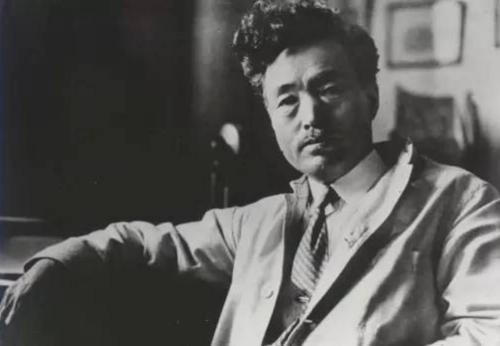
Hideyoshi Noguchi (1876-1928)
Hideyo NoguchiHe was the first scientist to isolate the syphilis pathogen from the central nervous system of patients with paralyzed dementia. Improved the technology and theory of the Wasserman reaction, and improved the Wasserman skin test for detecting syphilis.
Successfully cultivated Treponema pallidum and other microorganisms, and designed a method for cultivating microorganisms that had never grown in test tubes before. Also studied vaccines and serum for poliomyelitis, trachoma, and yellow fever.
One of the three great figures in the medical field during the Meiji period in Japan, a renowned infectious disease expert. He has been nominated for the Nobel Prize in Medicine three times and is known as a national treasure biologist in Japan“Hideyo Noguchi”Known as a 'national treasure'Japanese bacteriologist and biologist。

Statue of Hideyoshi Noguchi in Ueno Park, Japan
Overseas Research:
In 1899, he went to the University of Pennsylvania in the United States to study snake venom and published a research report on snake venom; In 1900, in S Under the guidance of Flexner, continue to study snake venom; In 1904, he entered the Rockefeller Institute and engaged in research on spirochetes, achieving significant achievements in the fields of serology, polio, rabies, syphilis prevention and treatment; In 1911, he was awarded a Doctor of Medicine in Japan; In 1914, he was awarded a Doctor of Science degree by the University of Tokyo in Japan; In 1915, he was awarded the Imperial Academy of Japan's Gift Award; In 1918, he was awarded the title of Researcher at the Rockefeller Institute in the United States; In 1920, he was awarded the honorary doctorate title by Yucatan Medical University
Medical education:
In 1897, Hideyoshi Noguchi studied at Tokyo Medical College and obtained a medical certificate in the same year.
In 1898, he worked at the Beili Institute of Infectious Diseases.
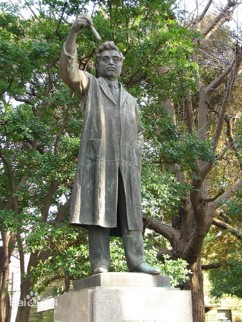

Statue of Hideyoshi Noguchi in Ueno Park, Japan
In 1922, he was awarded the title of Doctor of Science by Yale University; In 1923, he became a member of the Imperial Academy of Japan; In 1924, he was awarded the Medal of Honor by the French government; In 1925, he was awarded an honorary doctorate by the University of Paris; In 1925, he was awarded the title of "Fifth Rank" by the Japanese government; In 1928, he was posthumously awarded the "Second Class Asahi Shigemitsu Medal" by the Japanese government.
Continue researching:Hideyoshi Noguchi, regardless of his advanced age, personally went to Africa to investigate "yellow fever"
Unfortunatelypassed away:On May 21, 1928, Hideyoshi Noguchi was studying infectious diseases on the west coast of Africa
Unfortunately infected and died at the age of 51.
Influenceon future generations :Received high respect within Japan and hailed as“Japan'snational treasure”。
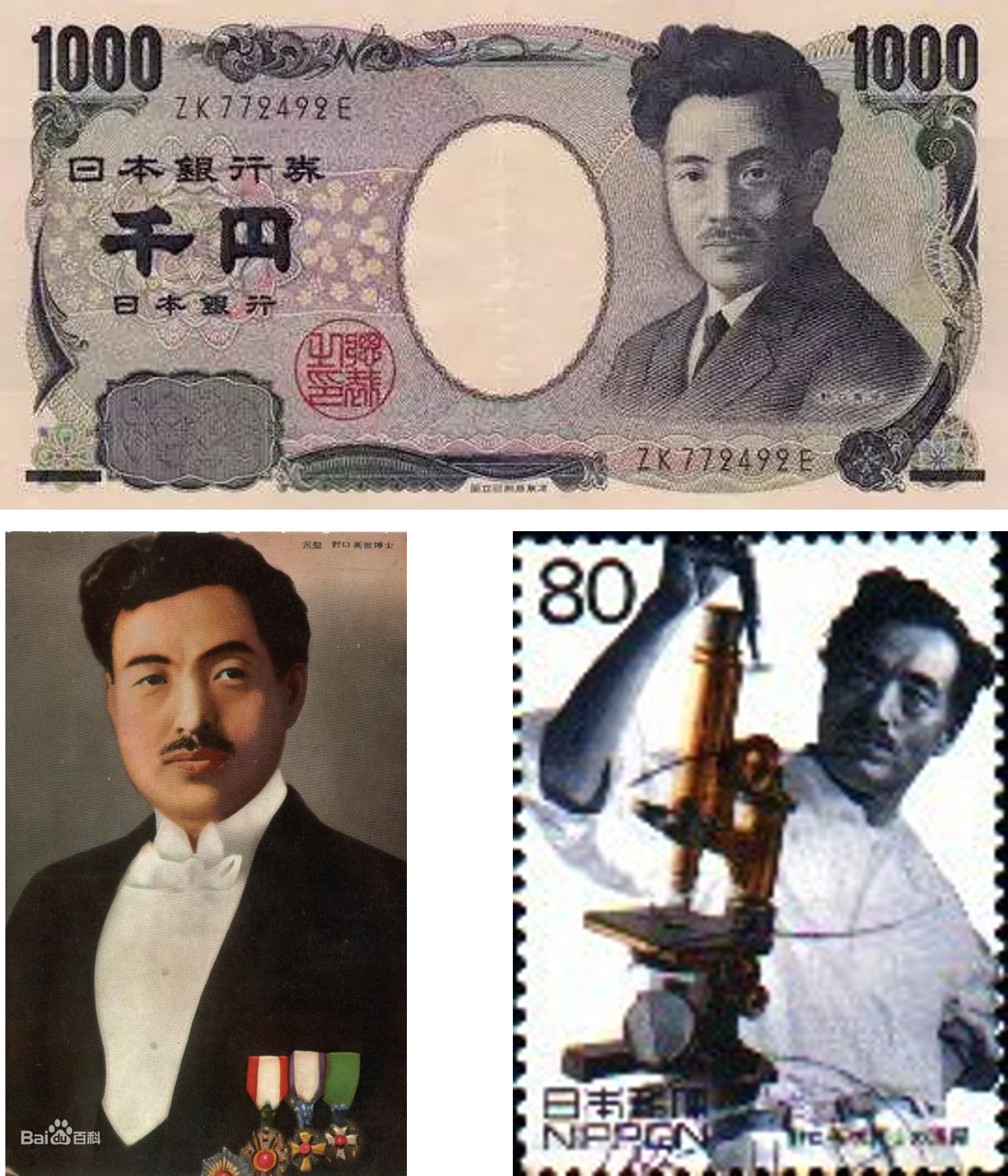
His portrait was printed on a 1000 yen banknote as a commemoration.
Japan has also established the Noguchi Eisai Lecture Hall and Memorial Hall to commemorate his contributions.
 English
  香港中文
香港中文