
The Wild Mouth Medical Research Institute of the American Foundation
In anticipation of the birth of the second and third generations of Hideyoshi Noguchi and to support clinical study abroad, Dr. Yoshihisa Asano founded the Noguchi Medical Research Institute of the American Foundation in 1983 to support international medical education and exchange activities.
Vice Chairman, Director and Ethics Review Committee, Founder of Noguchi Medical Research Institute Co., Ltd,Thomas Jefferson University faculty and staff, visiting professor, visiting professor at Da Lat University in Vietnam,Advisor to the International Society for Personalized Medicine, Doctor of Medicine

將“野口英世博士的精神”帶到費城
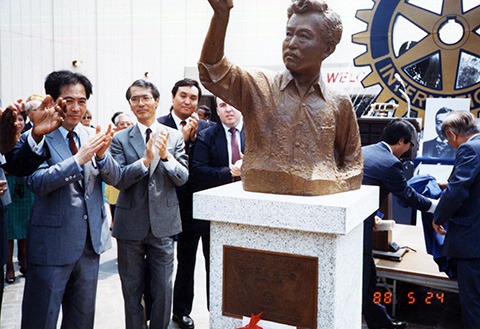
大約 100 年前的 1900 年 12 月,野口英世前往費城在美國學習醫學。
年輕的野口英世默默無聞,身無分文,但他對醫學充滿熱情,孜孜不倦地工作,最終被公認為一位偉大的醫學科學家,併為世界各地的醫學發展留下了許多成就。 起點是賓夕法尼亞大學。
野口醫學研究所於 1983 年在美國基金會的誕生地費城成立,以紀念野口秀世的成就,並繼承他的精神,創造第二和第三“野口英世”。
Today, it plays an important role in international medical exchanges, such as establishing a study abroad system for medical professionals based in Japan and the United States, and providing financial support for such studies abroad.
After World War II, Japanese medicine developed with the introduction of American medicine
If you think about it carefully, modern medicine has been around for a century. The development of medicine in Japan is remarkable. Especially, it was greatly influenced by post-war American medicine. In addition, aid is also extraordinary.
A young Japanese doctor who received Fulbright and Galioa scholarships to study in the United States. They had the opportunity to receive excellent training in basic and clinical medicine in the United States, and upon returning to Japan, they became lecturers at various medical schools, contributing to the development of Japanese medicine. It is not an exaggeration to say that most of the development of Japanese medicine today was brought about by the introduction of American medicine.
Medical exchanges between Japan and the United States will be interrupted
However, in the past decade or so, the situation has undergone significant changes. Nowadays, introducing American medicine has become very difficult. There are two main reasons for this.
Firstly, in the 1950s and 1960s, the United States experienced a shortage of doctors due to the impact of the Vietnam War. In order to make up for this, it actively accepted foreign residents. However, after the war ended, the number of doctors was met and there was no longer a need to accept foreign residents. Therefore, the number of scholarships in economically peripheral countries has also decreased.
The second reason is that the content of international student exams conducted in the United States has become difficult. Especially, it is very difficult for Japan to pass the FMGEMS (Foreign Resident Appointment Examination) for foreign residents since 1984, which may be due to differences in medical education policies between Japan and the United States, as well as reportedly weak English conversation skills for Japan.
Therefore, the number of Japanese residents studying in the United States has sharply declined. If this situation continues, new foreign medical knowledge and technology will not be able to be transmitted to Japan, which will have a serious impact on the future of Japanese medicine. The fact that the United States has made significant progress in medicine and medical technology and has distanced itself from Japan is a major disadvantage in an era where we have to think about medicine and healthcare from a global perspective.
Medical exchanges far away from economic exchanges
Given this situation, every country has built hospitals and medical laboratories in the United States and made efforts to introduce American medicine. However, despite Japan's deepening economic exchanges with the United States since the end of the war and the increasing number of visits between Japan and the United States due to business expansion and overseas travel, there are no Japanese hospitals or medical research institutions, and the number of Japanese doctors in the United States has plummeted to the level of 100. Compared to the number of American doctors in other Asian countries such as India and the Philippines, this number is very small. The severity of this situation can be understood by imagining the situation in the United States, for example, people who get sick and have to see a doctor, have to receive treatment, and feel frustrated because they don't speak the language.
On the other hand, there are tens of thousands of Americans living in Japan in the United States who complain about the lack of Japanese doctors who can examine them in English. Although some economic exchanges are so active that they have caused "economic friction", the current medical exchanges between Japan and the United States are stagnant and almost unimaginable.
獻給繼承「Hideyo Noguchi精神」
Young doctors dedicated to the future of Japanese medicine
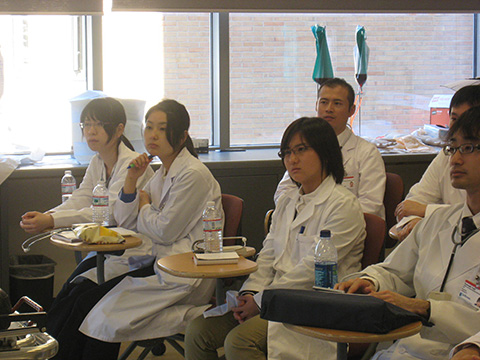
The establishment of the Noguchi Medical Research Institute was to restart medical exchanges between Japan and the United States, a relationship that has always been frustrating. In order for Japan to contribute to the development of US Japan medicine and global medicine in the 21st century, the continuity of US Japan medical exchanges is essential.
野口醫學研究所的活動始於「紀念出生於日本的世界著名醫生野口英世的偉大成就,並培養繼承其遺產的年輕醫生和領導醫學會的領導者」。。
The Noguchi Medical Research Institute believes that the continued international medical exchanges based on the United States and Japan will lead to the future of the Japanese medical community.
 English
  香港中文
香港中文